“My gaming laptop still needed its full-size charger even though my phone used USB-C.”
— setting up a travel desk in Norway
Will my laptop plug fit outlets in Norway?
Norway uses Type C and Type F outlets. Type C uses two round pins; Type F uses two round pins with side grounding contacts. For a laptop, the wall-cable plug must fit the socket and the charger brick must accept 230 V.
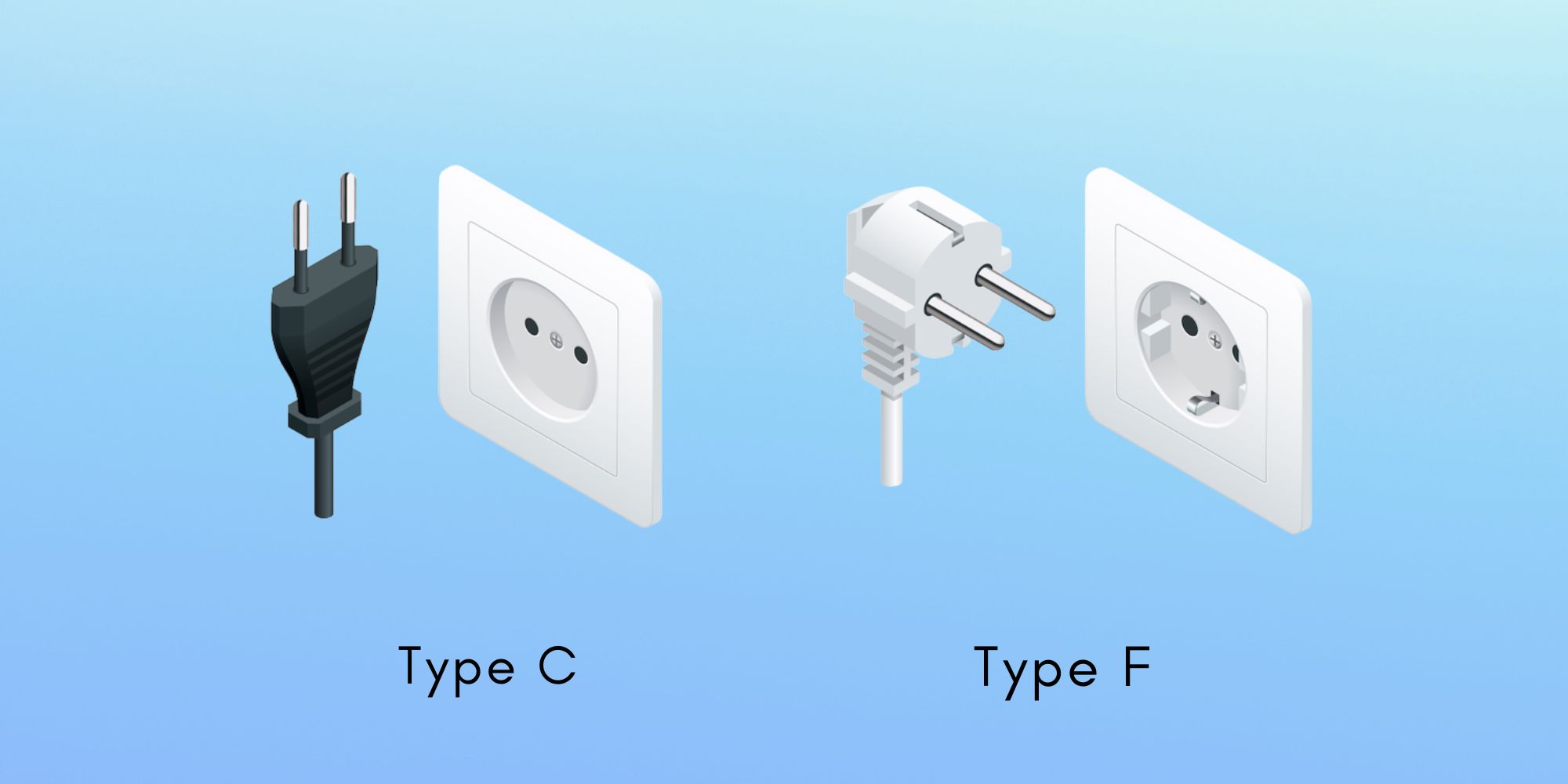
Norway: Type C and Type F plug shapes
Do I need a travel adapter for my laptop in Norway?
Start with the wall plug on the exact power brick you plan to pack:
- From the US or Canada? A Type A/Type B plug does not match C/F directly, so a plug adapter is normally needed.
- From continental Europe? If your laptop charger plug uses Type C/F, the shape may already match one of the local outlets. Check grounding and the exact socket before relying on a direct fit.
- From the UK? A Type G plug does not match C/F directly, so a plug adapter is normally needed.
- From Australia or New Zealand? A Type I plug does not match C/F directly, so a plug adapter is normally needed.
- Not sure? Match the plug shape first, then compare the INPUT or rating label with Norway’s 230 V supply.
Buy a travel adapter for laptop use in Norway
If your laptop charger plug does not fit C/F, a simple plug adapter is usually the lightest fix. A universal adapter can be useful on multi-country trips, but it does not convert voltage.
For a multi-country trip, you can compare a universal travel adapter that supports the outlet types on your itinerary.
→ See travel adapter options on Amazon.

EPICKA Universal Travel Adapter — a practical plug-shape option for Norway
Useful when your laptop charger already accepts 230 V but its wall plug does not match C/F. The adapter changes plug shape only.
Check current price on Amazon →As an Amazon Associate, TripPlanning.org may earn from qualifying purchases.What voltage and frequency should I check for in Norway?
Norway’s nominal supply is 230 V at 50 Hz.
Read the INPUT line on the laptop power brick. If its stated range includes 230 V and 50 Hz, the electrical input is compatible; then you only need to solve any plug-shape mismatch.
Many modern laptop chargers are designed for international input, but the label on your own charger is the source of truth.
Does my laptop charger need a voltage converter in Norway?
Usually not if the exact charger already accepts 230 V. Many electronic chargers cover a broad input range, but read the label rather than assuming. If 230 V is outside the stated range, use manufacturer-approved equipment or get qualified advice before connecting it.
→ Compare voltage converter options on Amazon only when conversion is genuinely required and appropriate for the equipment.

BESTEK voltage converter — only if conversion is actually required
Do not add a converter automatically. First confirm that your laptop charger does not already accept 230 V, then check wattage and manufacturer guidance.
View on Amazon →As an Amazon Associate, TripPlanning.org may earn from qualifying purchases.Travel-friendly picks on Amazon
A few travel-power extras to compare for a trip to Norway. Match every product to the electrical requirements of the equipment you actually carry.

Conair Dual-Voltage Travel Hair Dryer
A dual-voltage dryer for travelers who are also packing a hair tool alongside laptop gear for Norway.
View on Amazon →
Anker 735 Charger (Nano II 65W)
A compact multi-port USB-C charger for phones, tablets and many USB-C laptops when output matches the device.
View on Amazon →
Anker Zolo Power Bank 20,000mAh 30W
A portable battery for travel days; check airline rules and your laptop’s charging requirements before relying on it.
View on Amazon →As an Amazon Associate, TripPlanning.org may earn from qualifying purchases.